What it can run, and for how long
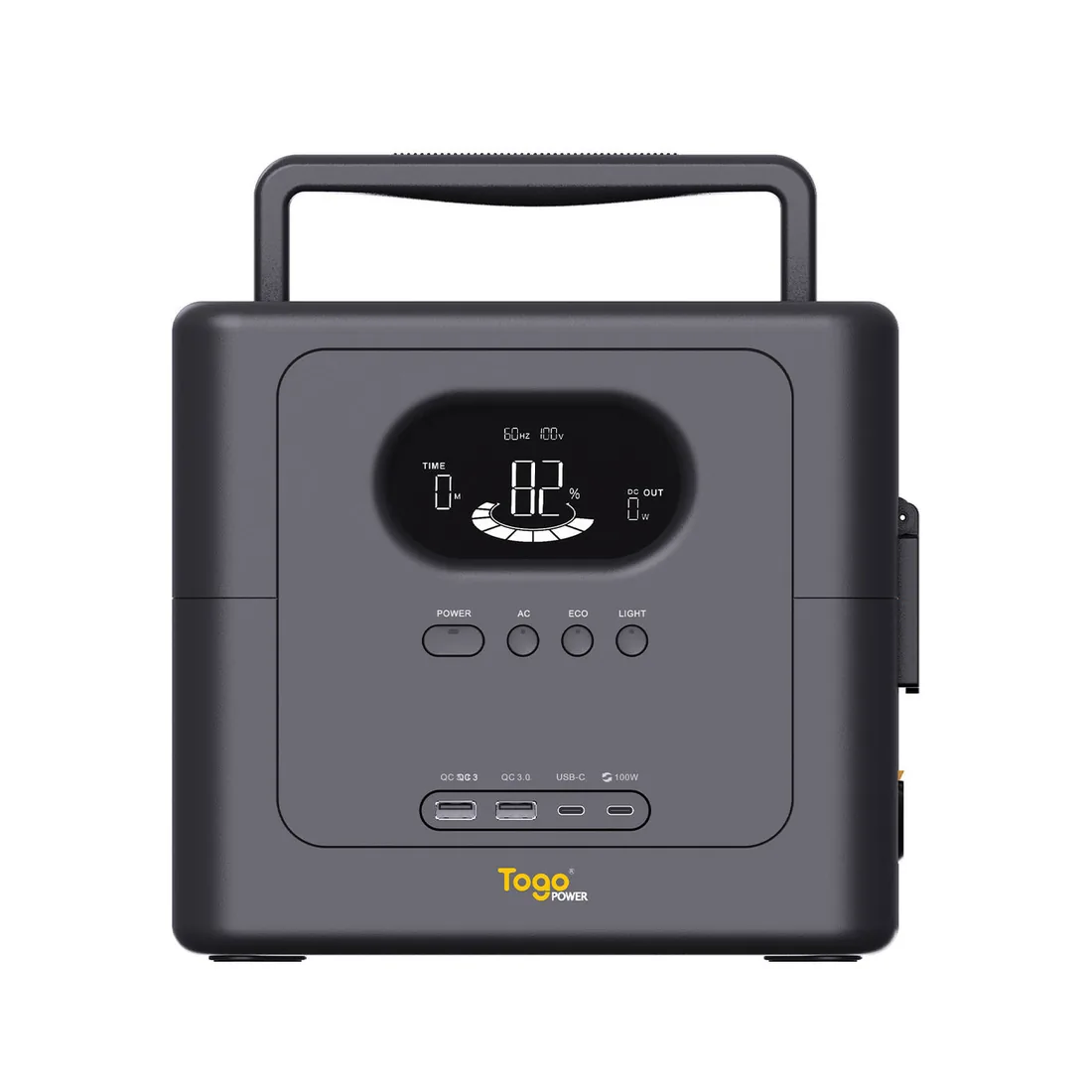
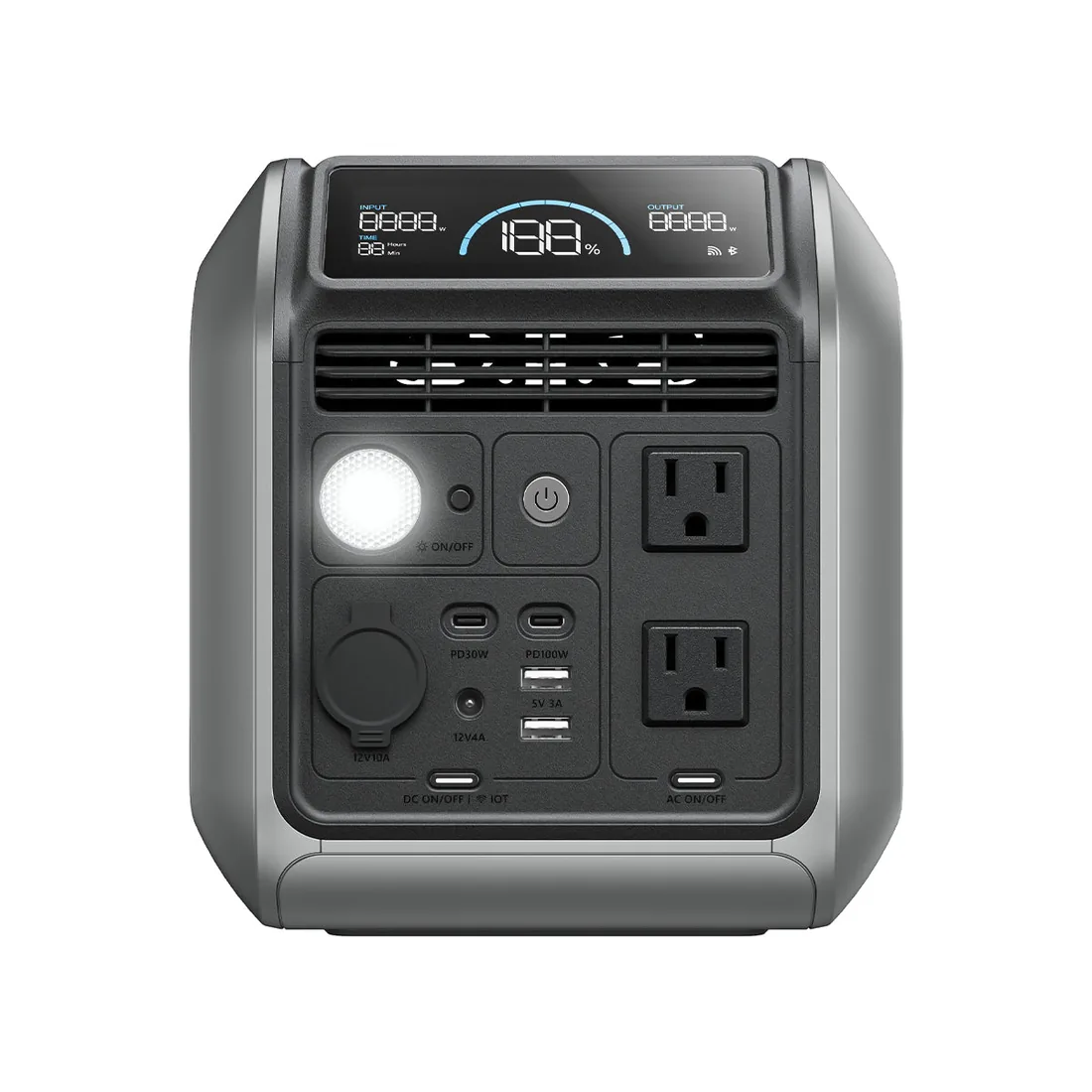
A power station is a battery with an inverter: it stores energy as watt-hours (Wh) and delivers it as AC watts (W). The Togo Power INFINITY 600(560Wh/600W)Power Station stores 560 Wh, of which about 476 Wh reaches your appliances after losses, and its inverter limits the load to 600 W at a time.
| Appliance (typical) | Running / starting watts | Can it run it? | Runtime on a full charge | |
|---|---|---|---|---|
| Refrigerator (modern, about 18–22 cu ft) | 150 W / 600 W start | Yes | 7.9 h | |
| Chest freezer (about 7 cu ft) | 100 W / 400 W start | Yes | 13.6 h | |
| Sump pump (1/3 hp) | 800 W / 1,500 W start | No | — | |
| Well pump (1/2 hp) | 1,000 W / 2,100 W start | No | — | |
| Gas furnace blower | 750 W / 1,500 W start | No | — | |
| Window air conditioner (5,000–8,000 BTU) | 600 W / 1,800 W start | Check surge | 1.3 h | |
| CPAP with heated humidifier | 70 W | Yes | 6.8 h | |
| Home oxygen concentrator | 300 W | Yes | 1.6 h | |
| Wi-Fi router and modem | 25 W | Yes | 19.0 h | |
| LED television (55 in) | 100 W | Yes | 4.8 h | |
| LED lighting (10 bulbs) | 100 W | Yes | 4.8 h | |
| Laptop and charger | 60 W | Yes | 7.9 h | |
| Phones and tablets charging (4) | 40 W | Yes | 11.9 h | |
| Ceiling or box fan | 75 W / 150 W start | Yes | 6.3 h | |
| Microwave oven (1,000 W cooking) | 1,500 W | No | — | |
| Coffee maker | 900 W | No | — | |
| Garage door opener (1/2 hp) | 550 W / 1,100 W start | Check surge | 43.3 h | |
| Washing machine | 500 W / 1,300 W start | Check surge | 2.4 h | |
| Electric space heater (1,500 W) | 1,500 W | No | — | |
| Central air conditioner (3-ton) | 3,500 W / 10,500 W start | No | — |
| Scenario | Running watts | Starting watts needed | Average draw | Fits | Estimated runtime |
|---|---|---|---|---|---|
| Essentials: refrigerator, router, lights, phones | 315 W | 765 W | 225 W | Check surge | 2.1 h |
| Essentials + sump pump | 1,115 W | 1,815 W | 345 W | Too much load | — |
| Essentials + furnace blower + TV | 1,165 W | 1,915 W | 700 W | Too much load | — |
| Essentials + window air conditioner | 915 W | 2,115 W | 585 W | Too much load | — |
Recharging
Recharge time depends on the source. Solar numbers below are our calculation for the panel wattage shown, assuming 75% real-world output and the approximate annual-average peak sun hours for each region; winter and cloud cover cut them sharply.
| Panel total | Basis | Florida and the Gulf Coast | Texas | California |
|---|---|---|---|---|
| 100 W | — | 1.4 sunny days | 1.5 sunny days | 1.4 sunny days |
| 200 W | — | 0.7 sunny days | 0.7 sunny days | 0.7 sunny days |
| 400 W | — | 0.4 sunny days | 0.4 sunny days | 0.3 sunny days |
See the solar recharge calculator for your own panel size and sun hours.
Connecting it to a home
You can plug appliances straight into the unit's outlets. Powering a home's circuits is different: it needs a properly rated transfer switch or the maker's home-integration hardware, installed by a licensed electrician.
If you plan to connect it to the house, compare it with the equipment in our transfer switch and hookup library and read the whole-house guide.
Fit check before you buy
Checks to make against your loads and your plan before ordering.
- ✓Loads fit the outputAdd up the running watts of everything you will run together; keep the total under 600 W.
- ?Starting surgeNo surge rating was stated in the sources we read; confirm with the maker before running motors.
- ?Outlets and voltageCheck the outlet types against your plugs.
- iRecharge planDecide how you will refill it: wall power, solar or a generator, within its stated input limits.
Specifications
Each figure is labelled with where it comes from. Numbered references link to the source list below.
Published specifications
Wattstanding calculations
| Usable energy (85% of capacity) | 476 Wh | Wattstanding calculation |
|---|---|---|
| Refrigerator runtime (typical) | 7.9 h | Wattstanding calculation |
| Price per kWh of storage | $893 | Wattstanding calculation |
Limitations to weigh
- Specifications are the maker's or seller's; Wattstanding has not tested this product.
- Runtime figures are calculations with stated assumptions, not measurements.
- Prices change; confirm the price, stock and what is included before ordering.
- No surge rating was found in the sources we read.
Alternatives worth comparing
Where to buy
Our link opens this exact product page. Prices and stock change; check before you order.
Every link opens the product page for this exact model. We may earn a commission; it never changes what we publish. Disclosure
Questions buyers ask
How long will the Togo Power INFINITY 600(560Wh/600W)Power Station run a refrigerator?
Can the Togo Power INFINITY 600(560Wh/600W)Power Station run a sump pump or well pump?
Can I use it to power my whole house?
Where can I buy the Togo Power INFINITY 600(560Wh/600W)Power Station?
Sources and verification
- Togo Power — INFINITY 600(560Wh/600W)Power Station — product page and specifications Retrieved 30 Sep 2026
Wattstanding has not tested this product hands-on. This reference is compiled from the sources above; our calculations are labelled and show their working. Electrical work belongs to a licensed electrician. Last verified 30 Sep 2026. How we work